Sourcing Onitsuka Tiger from Japan in 2026: A Collector's Guide
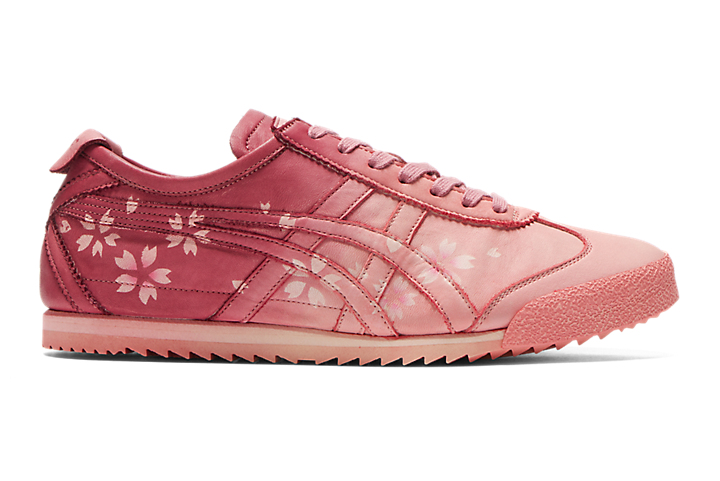
Onitsuka Tiger has one of the stranger brand histories in footwear. Founded in Kobe in 1949, it became Asics in 1977 when it merged with two other Japanese sportswear companies.
The Tiger name went dormant for decades before being revived in 2002 as a standalone fashion label — distinct from Asics, carrying the original Kobe heritage, and positioned deliberately between athletic history and high-fashion. The Mexico 66 silhouette, originally designed for the 1968 Olympics, is now the brand's most recognised shoe globally and one of the more frequently copied designs in the sneaker market.
What makes Japan worth sourcing from specifically isn't just price — though the yen exchange rate creates a real gap against European and US retail. It's access to two things that don't reach international markets: the Nippon Made series, which is handcrafted in Japan from premium domestic leathers and occupies a different product tier entirely from the standard retail line, and Japan-exclusive colourways from boutique collaborations that sell out in Japan and never export.
The Nippon Made line: what it is and why it matters
The standard Onitsuka Tiger retail line is manufactured overseas. The Nippon Made series is made in Japan — specifically in Kobe, where the brand was founded — using leathers sourced from Kobe and Himeji tanneries and assembled with a level of finishing that isn't present on standard pairs.
The practical differences are visible and tactile. The leather on Nippon Made pairs has a hand-painted or raw edge finish rather than the uniform machine-cut appearance of standard retail. The construction is more considered — hand-stitching at stress points, a last (the form the shoe is built on) specific to the Japanese-made production. These pairs age differently from standard retail: the leather develops a patina rather than just wearing down. In the resale market, Nippon Made pairs hold value significantly better than standard retail. The premium white or black textured box they come in — distinct from the grey box used for standard Onitsuka Tiger — is part of the package that resale buyers expect. If you're buying Nippon Made on the secondhand market, verify the box in the listing photos. Paying Nippon Made prices for a standard retail pair in a replaced box is a common mistake on marketplace listings where the seller either doesn't know or doesn't mention it.
The models most worth targeting in this line are the Mexico 66 GDX and Tai-Chi Nippon Made variants, which use the premium Kobe leathers. These are available at the official online store and at select department stores, but stock moves quickly on new colourways.
Tier 1: Primary retail and Nippon Made
Official Onitsuka Tiger Japan — onitsukatiger.com/jp The primary source for current season releases and the Nippon Made line. New colourway drops happen here first. The Japan site carries styles that either launch in Japan exclusively or launch here months before international retail. For Nippon Made specifically, the official Japan site has the broadest selection at any given time.
Isetan Mitsukoshi — isetan.mistore.jp Department store stockists carry Onitsuka Tiger colourways and packaging configurations that don't appear elsewhere — gift box sets, exclusive seasonal colourways developed specifically for department store retail. For premium packaging or a collaboration piece aimed at the domestic luxury market, Isetan is worth checking alongside the official site.
United Arrows — united-arrows.co.jp United Arrows develops exclusive Onitsuka Tiger colourways as part of their own buying programme. These are sold only through United Arrows stores and their online shop, and they don't reach international retail. Refined colourways — earth tones, premium leathers — aimed at the United Arrows customer rather than the streetwear market.
BEAMS — beams.co.jp Similar to United Arrows, BEAMS produces exclusive Onitsuka Tiger collaborations through their in-house buying. A different aesthetic from United Arrows — slightly more casual and colour-forward — but equally inaccessible outside Japan.
Tier 2: Sneaker boutiques and collaboration releases
atmos Tokyo — atmos-tokyo.com The most prominent name in Japanese sneaker culture for collaboration releases. atmos collaborates with Onitsuka Tiger on limited colourways that typically sell out on release day. Their online store handles same-day drops, which means a proxy that can process a fast checkout is necessary — standard automated proxies with multi-day processing times will miss these.
Mita Sneakers — mita-sneakers.co.jp Based in Ueno, Mita is more of an insider destination than atmos — smaller, less internationally famous, and consequently less picked over by overseas buyers. Their collaborations tend toward cleaner, more restrained aesthetics. Their online store is worth checking for sizes in discontinued colourways that have sold out at larger retailers.
ABC Mart — abc-mart.net Japan's largest footwear chain and a significant Onitsuka Tiger stockist. Carries a broader size range than boutiques and occasionally has regional or chain-exclusive colourways. Less exciting than boutique destinations but useful for finding specific sizes in standard releases.
Tier 3: Peer-to-peer marketplaces
The Japanese secondhand shoe market operates at a level of condition and honesty that makes it genuinely worth using for premium footwear. "New old stock" — pairs bought at retail, stored unworn, sold years later — is common in Japan and unusual elsewhere. Many Japanese collectors buy pairs they intend to keep as objects rather than wear, which means the secondhand market surfaces shoes in conditions that Western resale markets rarely produce.
Mercari JP — jp.mercari.com The broadest inventory for Onitsuka Tiger in the secondhand market. Search in Japanese for better results:
What you're looking for | Search term | Notes |
Made in Japan line | 日本製 or ニッポンメイド | Filters specifically for the premium handcrafted line |
Brand new / unworn | 新品 or 未使用 | Confirms never worn |
Limited edition | 限定 | Surfaces collab and anniversary models |
Good used condition | 美品 | Best for premium leather pairs at 40–50% below retail |
With box | 箱あり | Important for Nippon Made resale value |
Yahoo Auctions — auctions.yahoo.co.jp Better than Mercari for genuinely rare or vintage pairs — early 2000s revival-era models, original archive silhouettes, pairs from specific limited collaborations. The auction mechanism works in your favour on less-watched listings. Search for オニツカタイガー 未使用 (Onitsuka Tiger unused) to surface new old stock.
Tier 4: Specialist secondhand chains
For pre-owned pairs where you want condition verified by a professional before purchase.
2nd Street — 2ndstreet.jp Japan's largest reuse chain. Every pair is physically inspected and graded before listing. Their Condition S or A grade maps to what Western markets would call like-new or near-mint. The online inventory is searchable and regularly updated as physical stores process new intake.
Hard-Off / NetMall — netmall.hardoff.co.jp The online presence of Japan's largest general used goods chain. Individual Hard-Off stores across Japan — including in smaller cities and suburban locations — take in shoes, inspect them, and list them centrally. This geographic spread means inventory includes pairs sourced from markets that Tokyo-focused resellers don't have access to. Worth checking for older or less common models.
Authentication: what to verify before buying
Onitsuka Tiger is actively counterfeited, particularly the Mexico 66 and California 78 silhouettes. The standard retail line is easier to fake convincingly than Nippon Made, but both circulate as counterfeits in the peer-to-peer market.
Sole stitching. On authentic pairs, the stitching where the upper meets the sole is tight, even, and consistent. Counterfeits often show irregular spacing or slightly loose threads, particularly at the toe and heel where the join is most stressed.
Tongue label. The Onitsuka Tiger logo on the tongue label should be crisp and well-registered. On fakes, the logo printing is often slightly blurry or the proportions are subtly off. Request a close-up photo of the tongue label in any peer-to-peer purchase.
The stripes. The side stripe detailing should sit flush with the upper. On counterfeits, the stripes are sometimes applied slightly raised or with visible adhesive edges.
Nippon Made specific. The leather edges on genuine Nippon Made pairs show hand-finishing — slight variation in the painted edges, a texture that indicates manual work rather than machine processing. If the leather edges look perfectly uniform and plastic-like on a listing described as Nippon Made, request more photos or avoid the purchase.
The box. As noted above: Nippon Made comes in a premium white or black textured box. Standard Onitsuka Tiger comes in a grey box. A seller listing a shoe as Nippon Made with a grey box photo should be asked to confirm — either they've replaced the box (which affects resale value) or the description is inaccurate.
The "GDX" Serial Number. On high-end Mexico 66 GDX models, the serial number on the inside of the tongue is often embossed with a specific depth. If the number is just printed on or the embossing is shallow, it’s a red flag for a 2026 counterfeit.
Logistics: sizing and shipping
Sizing Japanese footwear sizing is in centimetres, measured as the actual length of the foot. This is more precise than US or EU sizing, which use nominal scales. A Japanese 27.0 corresponds approximately to a US men's 9 / EU 42, but the centimetre measurement is the reliable reference. Always check the tongue label or insole marking in listing photos to confirm the CM size — Japanese sellers list in CM and the conversion to US/EU is straightforward once you know your foot length.
Shipping the box For standard Onitsuka Tiger pairs, removing the shoebox before shipping reduces volumetric weight and can save $15–20 on international freight. For Nippon Made pairs, keep the original box — it's part of what a future buyer is paying for and removing it reduces resale value meaningfully. Tell your proxy which situation applies before they pack.
Condition preservation Request that the proxy stuffs the shoes with tissue before packing to maintain the toe box shape in transit. Leather toe boxes can crease permanently if the shoe is packed flat under weight. For Nippon Made pairs especially, a crushed toe box on arrival is an avoidable problem.
Brand and market information accurate as of April 2026. Collaboration releases and boutique availability change seasonally — verify before purchasing. Also read:


Comments